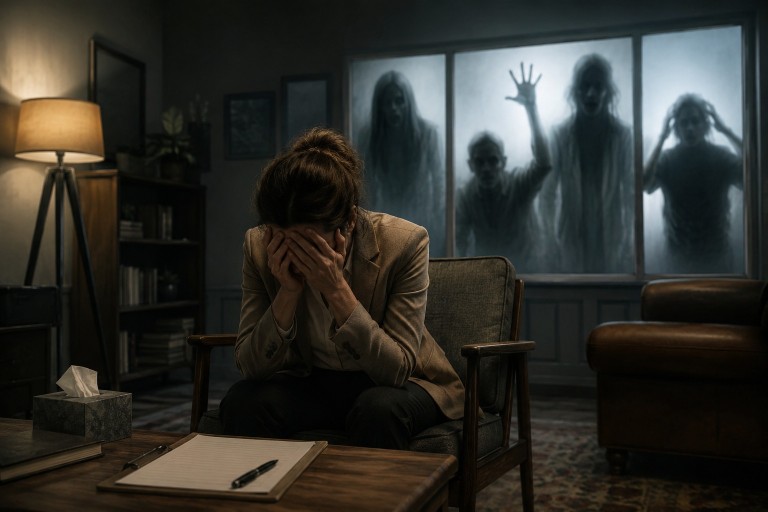
In a notable shift within the horror and psychological film genres, therapists are increasingly being portrayed as complex characters grappling with their own emotional difficulties. This change mirrors a broader societal conversation about mental health, acknowledging that therapists themselves are not immune to personal struggles. Films like “If I Had Legs I’d Kick You,” “Smile,” “Backrooms,” and “A Private Life” have positioned therapists at the heart of unsettling narratives, where they face trauma, fear, and psychological crises while trying to assist others.
Instead of casting therapists in the traditional role of wise advisors, these films elevate them to main characters whose mental resilience is put to the test. This narrative evolution coincides with therapy’s growing acceptance and discussion in mainstream culture. More individuals are seeking mental health services, and the normalization of therapy conversations, often amplified by social media, has inspired filmmakers to depict therapists as relatable, fallible humans rather than idealized figures.
Many of these films delve into themes of anxiety, burnout, and unresolved trauma by using elements of supernatural or psychological horror to symbolize internal emotional battles. This portrayal underscores the significant pressures that mental health professionals encounter, offering a fresh perspective that challenges the traditional, often flawless image of therapists.
As therapy becomes an increasingly integral part of public discourse, the film industry has seized the opportunity to reflect this reality. By presenting therapists as vulnerable, the stories invite audiences to reconsider their perceptions of mental health professionals, highlighting the shared human experience of emotional struggle. Such narratives not only resonate with viewers but also contribute to a more nuanced understanding of the complexities within the field of mental health.