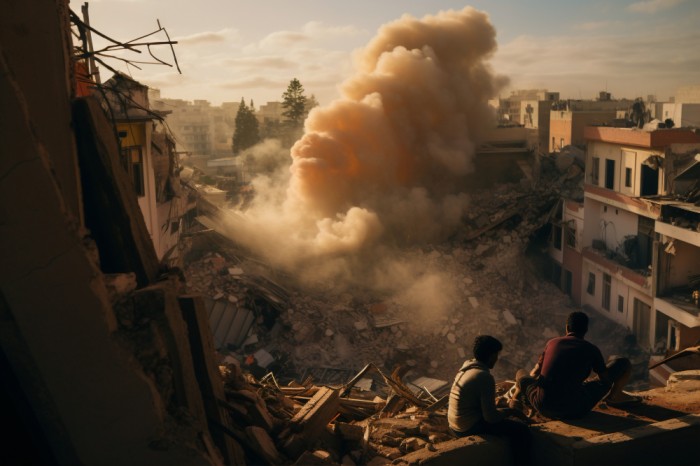
The United States and Iran have seen a rise in hostilities, following new military engagements from both sides, sparking fears of a broader conflict in the Gulf region. The US military announced it had targeted Iranian positions, including air defense systems, drone sites, and surveillance networks, in response to an assault on a commercial vessel in the crucial Strait of Hormuz. According to US officials, this action was intended to mitigate perceived Iranian threats in this strategic maritime area.
In a swift response, Iran’s Islamic Revolutionary Guard Corps stated that it carried out missile and drone attacks on military installations associated with the US in Kuwait and Bahrain. Iran asserted that its strikes hit several targets, which included a US air base in Kuwait and a naval facility in Bahrain, although these claims have yet to be independently verified.
Following these exchanges, security alerts were issued in both Kuwait and Bahrain. The authorities in these countries activated their defense systems and advised residents to seek safety as missiles and drones were detected. This escalation of military actions has heightened concerns over the potential collapse of the already fragile ceasefire between Tehran and Washington.
The recent military strikes represent another significant clash in a series of confrontations, particularly following earlier US assaults on Iranian military positions related to tensions in the Strait of Hormuz. This waterway is vital for global energy transportation and has become a focal point of contention between the US and Iran.
US President Donald Trump has accused Iran of breaching the ceasefire agreement and has cautioned that further military action might ensue if tensions persist. On the other hand, Iran holds the US responsible for aggravating the situation, alleging that Washington has violated previous agreements.